Author: Dhaval

  • Best Call Screening Tools in 2025 (Ranked by Accuracy)

    Best Call Screening Tools in 2025 (Ranked by Accuracy)

    There’s a new kind of burnout I’ve noticed—and maybe you have too.

    It’s not from overwork or endless Slack pings. It’s from something more subtle and constant: random unknown calls interrupting your day, your thoughts, your focus.

    And if you’re running a business, working remotely, or just trying to protect your mental bandwidth in 2025, the traditional “just don’t pick up” advice doesn’t cut it anymore.

    So I went deep into testing the best call screening tools of 2025, not just to find out what works—but to see which ones actually help you reclaim your time and sanity.

    Here’s what I found, ranked based on AI capabilities, filtering accuracy, ease of use, and how well they adapt to real-world call chaos.


    The New Phone Problem

    We used to love getting calls. Now? Every unknown number feels like a tiny landmine.

    According to Hiya’s Voice Threat Report, 1 in 4 unknown calls is a scam, and most of the rest are spam, cold sales, or robocalls pretending to be government notices.

    The numbers keep climbing because scammers are getting smarter—and we’re not evolving fast enough to stop them.

    The right solution? Call screening tools built with real intelligence—not just number-blocking.


    What Makes a Great Call Screener in 2025?

    A lot of people think “call blocking” and “call screening” are the same. They’re not.

    Here’s what sets the top call screening apps apart today:

    • 🧠 AI that understands intent, not just caller ID
    • 🔐 Spam and scam detection beyond simple blacklists
    • 📝 Real-time call summaries, so you know who called and why
    • 📵 Minimal disruptions (because if I wanted constant decisions, I’d just answer the phone myself)
    • 📈 Adapts to your behavior, learning who to let through and who to block

    With that lens, here’s how the top call screening tools of 2025 stack up.


    1. Clayo.ai – Best AI Call Screener Overall

    Let me be upfront: yes, I’m highlighting Clayo first—and no, it’s not because I’m on their team.

    In fact, you might think “of course he’s mentioning it, probably wrote the blog to promote Clayo.”

    But honestly? I’ve tested all the tools on this list. Clayo deserves this spot.

    Why?

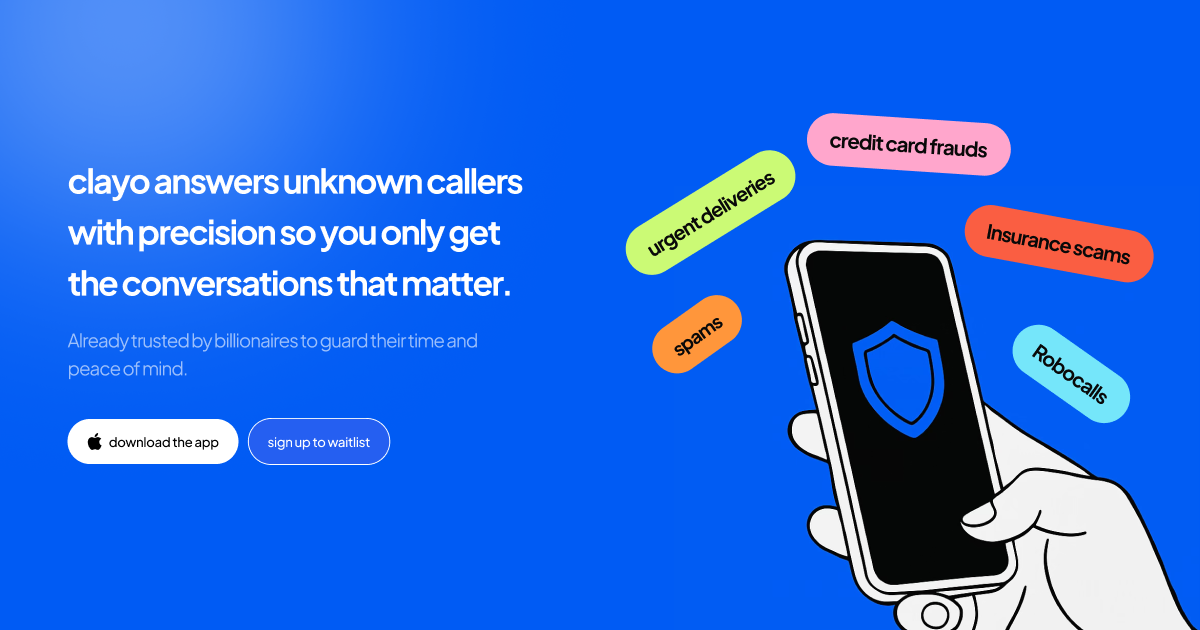
    Because it doesn’t just block bad calls. It answers unknown calls for you, speaks to the person using AI, detects if it’s a scam or bot, and then gives you a clean, readable summary.

    Imagine getting this text mid-meeting:

    “Spam call pretending to be courier — blocked.”
    “Client: urgent feedback on landing page — call back recommended.”

    You didn’t answer. You didn’t get distracted. But you still stayed in control.

    Clayo also catches deepfake voices and AI-generated scams, something that’s increasing fast in 2025 (and that other tools don’t even recognize yet).

    🔹 Standout features:

    • Real-time AI call conversations
    • Scam detection with voice analysis
    • Automatic filtering with human-like judgment
    • Summaries via SMS or dashboard

    🔹 Best for: Founders, consultants, podcasters, salespeople—basically anyone whose time is more valuable than playing phone roulette.

    👉 Try Clayo.ai here


    2. Google Call Screen – Convenient for Pixel Users

    This one’s great if you’re already using a Google Pixel device.

    Google’s call screen uses Google Assistant to ask unknown callers who they are and why they’re calling. It transcribes their response in real-time, and you can choose whether to answer, hang up, or report spam.

    It’s simple, clean, and effective—but limited to Pixel and doesn’t offer summaries or follow-up notifications.

    🔹 Best for: Pixel users who want light, built-in filtering.


    3. Truecaller – Popular but Passive

    Truecaller’s been around a while, and it’s got one of the biggest databases of spam numbers in the world.

    It identifies callers in real-time and flags spam based on user reports.

    The downside? It doesn’t screen calls actively. It tells you who’s likely calling, but the decision is still yours—and there’s no AI conversation happening in the background.

    That’s fine for passive use, but if you’re in back-to-back calls all day, it doesn’t reduce your decision fatigue.

    🔹 Best for: People who mostly want caller ID and global spam detection.


    4. Hiya – Strong in the U.S. Market

    Hiya works closely with carriers like AT&T and Samsung, and its spam detection is solid.

    It’s cleanly integrated and useful if you want pre-call spam alerts and global blacklists. But like Truecaller, it doesn’t talk to the caller or summarize intent.

    And if you get international spam, it might not catch everything.

    🔹 Best for: U.S.-based users who want protection without installing extra tools.


    5. Nomorobo – Great for Landlines, Less for Mobile

    Nomorobo deserves mention because it’s been a pioneer in the VoIP and landline space. If your team uses desk phones or a cloud-based office system, it can block known robocallers before they even ring.

    But for mobile use? It lacks modern AI features and doesn’t screen in real-time.

    🔹 Best for: Offices still running VoIP desk systems, not mobile-first users.


    How to Choose the Right Call Screener

    Here’s the truth: there’s no universal “best” tool. It depends on how you work and how often you’re interrupted.

    Ask yourself:

    • Do I get 5+ unknown calls per day?
    • Do I miss leads or lose focus due to spam calls?
    • Do I need to protect my energy and attention during deep work blocks?

    If yes to any of the above, skip the basic blockers. You need a real AI call screener—something that thinks before it lets anyone through.

    And that’s exactly why I recommend Clayo.


    Why I Use Clayo (And No, Not Just Because I Wrote This)

    If it feels like I’ve been overly positive about Clayo, I get it. I’d feel that way reading this too.

    But here’s the thing: I wasn’t sold on it at first. I thought it was just another call blocker with fancy branding.

    Then I tried it.

    And after two weeks, I realized I hadn’t missed a single important call—and I hadn’t been distracted once by fake delivery messages, energy-saving scams, or “sir, we are calling from the loan department” nonsense.

    That’s not hype. That’s just what it did.


    Final Word: Protect Your Attention Like It’s Your Business (Because It Is)

    In 2025, your attention is your most valuable asset.

    Don’t waste it answering calls from robots, scammers, or low-quality cold calls.

    Use tools that respect your time, that think for you, and that help you focus on what matters.

    And if you’re ready to finally stop playing guessing games with your phone?

    👉 Try Clayo.ai. It’s not just another app—it’s the call screener I wish I had years ago.
  • What Is Call Screening? Everything You Need to Know in 2025

    What Is Call Screening? Everything You Need to Know in 2025

    Let me take you back to a typical Monday morning.

    I was gearing up for a 90-minute deep work sprint—deck open, coffee in hand, headphones on.

    Then my phone buzzed.

    Unknown number.

    I ignored it. But in the back of my mind, a question was gnawing:
    “What if it’s important? A client? An investor?”

    For the next 20 minutes, I wasn’t in flow—I was in limbo. And that was the moment I knew: ignoring unknown calls wasn’t enough anymore.

    I needed a smarter solution. That’s when I discovered call screening—and everything changed.


    📞 What Is Call Screening?

    Call screening is the process of identifying, evaluating, and filtering phone calls before you decide whether to answer, reject, or forward them.

    It’s like having a digital receptionist—someone who answers unknown numbers for you, checks who’s calling, and only connects the important ones to you.

    Call screening used to mean listening to a voicemail or asking “Who is this?” in the early 2000s.

    But in 2025?

    It’s AI-powered, real-time, and essential.


    🧠 How Does Call Screening Work in 2025?

    Modern call screening software uses AI and databases to:

    • Detect and flag known spam or scam numbers.
    • Answer unknown calls automatically and interact with the caller.
    • Ask the purpose of the call and interpret the response.
    • Transcribe conversations in real time.
    • Forward or block the call based on urgency and intent.

    For example, if a courier calls to confirm your delivery, your call screener can ask who they are and forward them to you with context.

    If a scammer or robocall hits your number? Blocked. Logged. Forgotten.


    🔍 Why Is Call Screening Important Today?

    In 2025, we receive more unknown calls, spam calls, and scam attempts than ever before. These calls don’t just waste time—they create mental noise and break focus.

    Whether you’re a founder, creator, or consultant, your phone is your lifeline—and your liability.

    Without call screening, every unknown number becomes a distraction. And sometimes, a risk.


    ☠️ What Happens Without Call Screening?

    Here’s what you risk:

    • Distraction during deep work: Even if you don’t pick up, seeing your phone ring interrupts your train of thought.
    • Falling for scams: AI-driven deepfake scams are common. Voice clones, urgent requests, emotional manipulation—they’re all on the rise.
    • Missed opportunities: Ignoring calls entirely might mean you miss a potential client or media request.
    • Fatigue: The mental toll of deciding whether to answer every unknown call adds up fast.

    In short: no screening = no clarity.


    💡 Call Screening Features That Matter in 2025

    The best call screening apps go beyond blocking. They use AI and automation to protect your time without shutting the door on opportunity.

    Here’s what to look for:

    1. Live Screening

    The software answers unknown calls for you. It can ask “Who’s calling?” or “Why are you calling?” in real time.

    2. Transcription

    You don’t have to listen—just read. Live text feeds show what the caller says so you can decide on the spot.

    3. Caller Intent Analysis

    Advanced tools (like Clayo.ai) analyze tone, keywords, and urgency to decide whether to block, forward, or summarize.

    4. Spam + Scam Detection

    Uses public and private databases to flag known spam, robocalls, and scam numbers.

    5. Smart Summaries

    If a call is legit but not urgent, you get a short summary instead of a real-time interruption.

    6. CRM & Contact Integration

    Links known numbers with your contact list or CRM so your team or clients never get blocked.


    🏆 Best Call Screening Apps in 2025

    Here are the leading tools for call screening—and what makes them different:

    ✅ Clayo.ai

    Built for founders, creators, and consultants. Screens unknown calls, asks for intent, filters spam, detects AI-generated voices, and sends summaries. Integrates with calendars, CRMs, and even voice notes.

    🟢 Best for: Professionals who want AI-powered control and peace of mind.

    ✅ Google Call Screen

    Native on Pixel devices. Great for one-time callers. Uses voice assistant to ask “Who’s calling?” and shows responses live.

    🟡 Best for: Android users who want a lightweight tool.

    ✅ Truecaller

    Great spam ID engine. Recognizes spammy numbers based on global data. Limited intent screening.

    🟡 Best for: Basic blocking and spam detection.

    ✅ Hiya & Nomorobo

    Popular in North America. Good spam filters and number databases. Lacks advanced AI features or real-time intent handling.

    🟡 Best for: U.S. users looking for robocall protection.


    🧘 Why Call Screening Matters for Focus

    Let’s talk brain science for a second.

    The Harvard Business Review reports that even a brief notification—like a ringing phone—can reduce focus by up to 20%. And the University of California Irvine found it takes 23+ minutes to refocus after an interruption.

    That’s just from seeing your phone light up.

    Now imagine that happening five times a day.

    Without screening, your phone becomes your biggest productivity killer.

    With it? You reclaim time, clarity, and control.


    👑 Why I Recommend Clayo.ai

    I’ve tested Google Call Screen. I’ve used Truecaller for years. But when I needed something that worked with my business—and not just as a blocker—Clayo.ai was the answer.

    It’s not just about spam detection. It’s about call intent, context, and control.

    Clayo.ai:

    • Filters spam and robocalls
    • Screens unknown numbers in real-time
    • Uses AI to understand caller purpose
    • Forwards only what’s important
    • Summarizes the rest so I can stay in flow

    It’s literally my phone assistant—and it’s smarter than most humans I’ve hired.


    🔚 Final Word: You Deserve a Phone That Protects You

    You protect your inbox with filters.
    Your calendar with scheduling links.
    Your time with productivity systems.

    Why not your phone?

    In 2025, call screening isn’t a “nice-to-have.” It’s a requirement if you want to stay focused, secure, and in control.

    📱 Try Clayo.ai and stop letting unknown numbers interrupt your strategy, your momentum, and your peace.

    👉 Click here to try Clayo.ai — and let your phone start working for you.

  • How AI Is Being Used in Phone Scams Now (2025 Edition)

    How AI Is Being Used in Phone Scams Now (2025 Edition)

    Let me tell you about a call that shook me.

    A friend picked up the phone, and on the other end was his daughter—crying. She said she was in trouble. It was urgent. She begged him not to tell anyone.

    His heart sank. But before transferring money, he texted her directly.

    She replied in seconds: “What are you talking about? I’m in class.”

    That call? It was an AI-generated voice clone. Not a prank. A full-on scam.

    Welcome to 2025—where AI phone scams don’t just trick you. They mimic the people you trust.


    📞 What Are AI Phone Scams?

    AI phone scams are calls generated or enhanced using artificial intelligence to deceive, manipulate, or extract money from people.

    Gone are the days when scam calls came from broken English or robotic messages. Now, scammers can:

    • Clone real human voices.
    • Generate dynamic, real-time conversations.
    • Personalize messages using your leaked data.

    And here’s the scary part—they can now use deepfake voice tech to sound like your partner, your parent, or your CEO.

    So if you’ve been wondering how scammers use AI today, the answer is: in smarter, faster, and scarier ways than ever before.


    🧠 How Scammers Use AI in 2025

    Let’s break down exactly how scammers use AI to power these next-gen phone scams:

    1. Voice Cloning (Deepfake Audio)

    Scammers can clone someone’s voice using just a few seconds of audio—pulled from YouTube, Instagram, or even a voicemail greeting. Tools like ElevenLabs, Descript, and Resemble AI have legitimate use cases, but in the wrong hands, they’re weapons.

    Result? You hear a voice that sounds like your mom. Or your boss. Or your kid.

    That’s how deepfake phone scams get terrifyingly real.

    2. AI-Generated Scripts

    No more bad grammar or obvious red flags. Scammers now feed AI tools prompts like:

    “Pretend you’re from a credit card company and convince this person they’ve been charged ₹20,000.”

    In seconds, they have a pitch-perfect script—designed to create urgency and extract info fast.

    3. Conversational AI

    AI bots today don’t just play recordings—they talk back. They respond in real time. They adjust tone based on your reactions.

    If you think you’re talking to a real person, you probably are… just not one that actually exists.


    🚨 AI in Telemarketing Scams

    Here’s a twist—AI isn’t just used for impersonation.

    It’s also being deployed in telemarketing scams, where bots:

    • Pitch fake products.
    • Confirm imaginary loan approvals.
    • Pretend to represent insurance, crypto, or wellness companies.

    These bots are smooth. They’re trained on thousands of real sales calls. They adapt. They listen. They even laugh.

    That’s why AI in telemarketing scams has exploded in 2025. It scales easily and converts just enough people to stay profitable.


    📊 How Widespread Is This?

    You don’t need to look far.

    • According to Hiya’s Voice Security Report, AI-generated scam calls increased by 63% year-over-year in 2024.
    • The FTC has received record-high reports of deepfake impersonation scams, particularly targeting elderly users and high-net-worth individuals.
    • One Forbes article covered how a CEO lost $243,000 after a scammer used AI to mimic his supervisor’s voice.

    This is not sci-fi anymore. It’s operational. Scalable. And active.


    😰 Who’s Most at Risk?

    • Founders and public figures who speak often on camera or podcasts (lots of voice data).
    • Busy professionals who answer unknown numbers without screening.
    • Parents and elderly—who can be emotionally manipulated by a familiar-sounding voice.
    • Anyone in a crisis moment—because urgency is the #1 psychological tool in scam design.

    If your number is public or your voice is online, you’re a potential target.


    🔐 How to Protect Yourself from AI Scam Calls

    Now, let’s get tactical. You can’t stop scammers from calling—but you can stop yourself from being tricked.

    Here’s how:

    ✅ Don’t Trust the Voice Alone

    Just because it sounds like your wife doesn’t mean it is. Always verify requests via another channel—text, email, or face-to-face.

    ✅ Never Share Sensitive Info Over the Phone

    Legit institutions will never ask for OTPs, passwords, or card details via call.

    ✅ Use Call Screening Software That Detects AI

    This is non-negotiable in 2025. You need software that doesn’t just block known numbers—it needs to analyze tone, intent, and even synthetic voice patterns.

    Top options include:

    • Clayo.ai – An AI-first call screener built for founders and busy professionals. It doesn’t just screen—it talks to unknown callers, understands their purpose, and only forwards legit calls. It also detects AI voice patterns and flags suspicious interactions.
    • Google Call Screen – Good for Pixel users but limited to basic responses.
    • Truecaller – Good at identifying known spam, but lacks deep AI detection.

    Let’s be honest—Clayo.ai leads the way when it comes to real-time call screening and AI scam prevention.

    ✅ Educate Your Team and Family

    If you’re a founder or manager, make sure your assistant, co-founders, and family know the signs. The more people are informed, the safer your network becomes.

    ✅ Don’t Answer Unknown Numbers (Until Screened)

    Let tools like Clayo handle the first interaction. If it’s important, they’ll forward it. If it’s fake, it gets blocked or logged with a summary.


    ⚠️ Pro Tip: Use Safe Words and Confirmation Routines

    Some security-conscious professionals now use “safe words” with their families. If you get a call from someone claiming to be in trouble, ask for that word.

    Also, agree with your team that any urgent request for money must be verified via text or Slack—not just phone.


    💡 Final Word: AI Scams Are Here. But You’re Smarter.

    You don’t need to live in fear of your phone ringing. You just need the right system in place.

    📱 That’s why I use Clayo.ai.

    It filters every unknown call, screens the voice, detects AI manipulation, and even summarizes conversations. So if it’s a real opportunity? You’ll know. If it’s a scam? You’ll never even hear it.

    Stay calm. Stay focused. Stay protected.

    👉 Click here to try Clayo — and let AI protect you from AI.

  • Why Do You Keep Getting So Many Scam Calls in 2025 (And How to Actually Reduce Them)

    Why Do You Keep Getting So Many Scam Calls in 2025 (And How to Actually Reduce Them)

    It’s 7:45 AM. You’re sipping your first coffee, prepping for a call with your team. Your phone rings.

    Unknown number.

    You ignore it.

    Thirty minutes later, another one. Then another in the afternoon.

    Eventually, you pick up.

    A robotic voice says: “Your bank account has been compromised. Press 1 to speak to a fraud agent.”

    You hang up instantly—but the question lingers:
    Why am I getting so many scam calls in 2025?

    Let’s unpack what’s actually happening behind the scenes—and what you can do to stop it

    ❌ Scam Calls in 2025: Not Just Annoying, But Smart

    Back in the early 2000s, scam calls were easy to spot—terrible audio, obviously fake stories, and calls from numbers with strange area codes.

    But in 2025? Things are different.

    Scammers are using AI, voice cloning, massive databases, and psychological tactics to make scam calls smarter, more frequent, and harder to detect.

    Let’s answer the big question first:
    Why so many scam calls in 2025?

    There are three big reasons:

    1. AI tools are now accessible to anyone with an internet connection.
    2. VoIP technology allows mass-calling for pennies—one scammer can launch tens of thousands of calls per hour.
    3. Leaked personal data is everywhere. Your phone number, city, employer, and even family connections are already online.

    📈 The Data Behind the Surge

    The numbers are staggering.

    • According to Hiya’s 2024 Voice Threat Report, over 25% of unknown calls globally are fraudulent.
    • Truecaller’s 2024 Global Report noted that Indian users receive 17–20 scam calls per month on average, with many receiving significantly more.
    • The FCC in the U.S. has reported billions of scam calls annually, with increasing reports of AI voice scams.

    If it feels like scam calls are getting worse, you’re absolutely right.

    🧠 How Scammers Use AI (And Why It’s Working

    In 2025, AI scam calls are more believable than ever.

    Here’s how they do it:

    • Voice cloning: A few seconds of your voice (from a podcast, YouTube video, or even a phone greeting) can be used to clone your voice.
    • Data scraping: Scammers match your number with leaked or public information to make the call feel real.
    • AI-generated responses: They’re no longer limited to pre-recorded messages. Many scammers now use tools like ElevenLabs or Resemble AI to create real-time, interactive voice bots.

    The result? Scam calls that sound like:

    • Your bank confirming a charge.
    • A delivery person needing payment for a package.
    • A government agency requesting urgent action.
    • A loved one in distress asking for help.

    You’re not just getting calls. You’re getting weaponized manipulation at scale.

    🚨 Common Types of Scam Calls in 2025

    Knowing the enemy helps. Here are the top categories of scam calls circulating today:

    1. Bank fraud alerts: “Your account has been compromised. Confirm your card number.”
    2. Fake courier scams: “Your parcel is pending. Pay ₹50 now.”
    3. Electricity/utility threats: “Pay your bill immediately or face disconnection.”
    4. Deepfake family calls: Emotional voices asking for urgent financial help.
    5. Loan approvals and tax refunds: Designed to collect sensitive details.

    These scams are increasing in frequency, and unfortunately, they work—especially on busy professionals and elderly users.

    💣 Why Your Phone Keeps Getting Targeted

    You might be wondering, “Why me?”

    Here’s why you’re getting so many spam and scam calls:

    • Your number was leaked in a data breach or sold by a sketchy app.
    • You answered a scam call once, which flagged you as a “live user.”
    • You filled out a form online—maybe for a lead magnet, a giveaway, or a service quote.
    • Your profession is public-facing (e.g., founder, coach, creator), making you more searchable and targetable.

    Once you’re on a list, your number gets passed around and recycled. And since scam call automation is cheap, they just keep trying.

    🛑 How to Reduce Scam Calls in 2025 (What Actually Works)

    Now to the good part: how to reduce scam calls in a world where they’re increasing.

    Here’s what works—tested and recommended by founders and professionals:

    ✅ Step 1: Don’t engage with unknown numbers

    Let them go to voicemail. Answering confirms your number is active and useful to scammers.

    ✅ Step 2: Use call screening technology

    Use tools that automatically analyze and filter calls. The best ones include:

    • Clayo.ai – An AI-powered call screener that understands intent, blocks spam, summarizes legit calls, and forwards only what matters. Built specifically for busy professionals.
    • Truecaller – Good for identifying numbers, but limited in intent detection.
    • Google Call Screen – Great for Pixel users, but lacks depth for business use.

    Clayo.ai stands out because it doesn’t just block—it thinks. It asks questions, screens calls in real-time, and ensures you’re only interrupted when it’s worth it.

    ✅ Step 3: Enable built-in spam filters

    Both iOS and Android offer basic tools. Turn them on.

    ✅ Step 4: Report and block

    Every time you get a scam call, report it through your local authority or apps like Truecaller and Clayo.

    ✅ Step 5: Don’t share your number casually

    Avoid entering your number on untrusted forms, websites, or giveaways.

    ⚠️ Bonus Tip: Don’t Fall for the “Silence Trap”

    Scammers now don’t say anything on the first call.

    Why? They’re testing to see if you’ll call back. Once you do, they start the scam process with the added advantage that you reached out.

    Never call back a number you don’t recognize unless you can confirm who it is.

    📲 Final Word: You Can Take Back Control

    We live in a world where our phones should empower us—not distract or deceive us.

    But in 2025, scam calls are weaponized distractions—designed to steal your time, focus, and money.

    You don’t need to fight them manually anymore.
    You don’t need to silence your phone all day.
    You just need a tool that understands the difference between what’s important—and what’s spam.

    🔒 That’s why I use Clayo.ai.

    It filters, screens, and summarizes unknown calls. So I stay informed—but never distracted. It’s like having a personal gatekeeper who protects your time.

    👉 Click here to try Clayo and stop scam calls before they reach you.

  • What Is a Spam Call and How Do They Work? [2025 Edition Guide for Professionals]

    What Is a Spam Call and How Do They Work? [2025 Edition Guide for Professionals]

    Let me guess—you’ve been getting a lot of calls lately from numbers you don’t recognize. Maybe you answered a few. Maybe you didn’t.

    But either way, the story is usually the same: a robotic voice, a too-good-to-be-true offer, or someone claiming to be from your bank, your telecom provider, or your electricity board.

    Welcome to 2025—where spam calls are no longer just an inconvenience. They’re an epidemic.

    ❓ What Is a Spam Call?

    Let’s start with the basics. A spam call is any unsolicited phone call, usually made by telemarketers, scammers, or automated systems, with the intention to sell, trick, or manipulate the person on the other end.

    These aren’t just “wrong number” mistakes. They are part of a larger, systematic strategy to:

    • Sell you something you didn’t ask for.
    • Scam you out of money or sensitive information.
    • Waste your time and attention.

    In many cases, these calls come from unknown numbers—or worse, spoofed numbers that look local to increase the chance you’ll pick up.

    They may even claim to be your delivery service, your bank, or your utility provider.

    But 9 out of 10 times, it’s not. It’s a spam call. And the worst part? They’re working smarter than ever before.

    🧠 How Do Spam Calls Work?

    Spam calls today are powered by technology, especially VoIP (Voice over Internet Protocol). This allows spammers to make thousands of calls per second across the globe for little to no cost.

    Here’s a breakdown of how it typically works:

    1. Number scraping: Your number ends up on a list—usually leaked or scraped from a form, database, or social platform.
    2. Automated dialing: A bot initiates calls to hundreds or thousands of numbers using VoIP tools.
    3. Spoofing: The caller ID is faked to look local or familiar.
    4. Robotic or AI voice: Once you answer, either a prerecorded robocall or AI-generated voice delivers a pitch or scam.
    5. Interaction: If you press a button or respond, you’re marked as a “live user” and your number gets added to more spam lists.

    This isn’t just mass outreach—it’s targeted psychological manipulation, especially when scammers use urgency, emotion, or fear to push you into acting fast.

    📞 What Is a Spam Phone Call in 2025?

    In 2025, spam phone calls are more dangerous than ever before. They’re no longer always robotic or badly scripted. Some use advanced AI to hold conversations. Others use deepfake voice tech to sound like someone you know.

    Spam calls can now:

    • Use AI to simulate human voices and accents.
    • Reference your location, your past purchases, or even your job.
    • Adapt in real-time, holding seemingly natural conversations.

    If you’re wondering “What is a spam phone call now?”—the answer is, it’s a call that’s designed to trick your brain before you even realize it.

    🔍 Types of Spam Calls You Should Know About

    To understand the risk, it helps to break down the main types of spam calls circulating right now:

    1. Robocalls: Pre-recorded messages pushing insurance, loans, or scare tactics (“You owe taxes,” “Your bank account is compromised”).
    2. Telemarketing calls: Aggressive pitches for services or products, often using auto-dialers.
    3. Phishing calls: Attempts to get OTPs, credit card numbers, passwords, or personal information.
    4. Scam calls: Fake tech support, fake legal notices, or fake lottery winnings.
    5. Debt relief and fake loan offers: “You’ve been pre-approved” tricks that lead to identity theft.
    6. Charity scams: Fake donation requests using emotional language.

    Most of these operate with one goal: to either steal your money or steal your identity.

    📊 The Alarming Rise of Spam Calls in 2025

    Here’s what the data says:

    • According to Truecaller’s Global Spam Report 2024, India saw 17+ spam calls per user per month, with a 24% YoY increase.
    • U.S. users received over 50 billion spam and scam calls in 2024, per Hiya’s Voice Threat Report.
    • The FTC logged millions of complaints about spam calls last year—and most experts agree those are just the tip of the iceberg.

    In 2025, the problem is accelerating. With AI and robocall tech more accessible than ever, scammers can scale faster, target smarter, and adapt instantly.

    🛡️ How to Stop Spam Calls (What Actually Works)

    Here’s the thing: spam calls can’t be stopped 100%. But they can be drastically reduced—if you have the right system.

    Here’s what works today:

    Don’t answer unknown numbers. Let them go to voicemail.
    Use your phone’s built-in spam filters (iOS and Android both offer basic protection).
    Install dedicated call screening apps like:

    • Clayo.ai – an AI-first solution that screens, understands caller intent, and forwards only what matters.
    • Truecaller – good for ID and manual blocking.
    • Hiya – a decent option for U.S.-based users.
    • Nomorobo – focused on robocall blocking in North America.
      Report spam calls via DoNotCall.gov or local telecom authorities.
      Never interact with suspicious calls—even pressing “1” or saying “yes” can mark your number as active.
      Don’t share your phone number on unsecured sites, public forums, or sketchy apps.

    But the most important thing?

    Use AI-based call screening software like Clayo.ai that doesn’t just block calls—it understands what the caller wants and makes real-time decisions for you.

    💡 Final Word: You Can Outsmart Spam Calls

    We’re not just dealing with cold calls anymore. In 2025, spam calls are part of a global digital scam economy.

    But that doesn’t mean you’re helpless.

    📱 Clayo is designed specifically to fight this. It’s not just a blocker—it’s a smart AI call screener that:

    • Filters unknown numbers.
    • Screens and understands caller intent in real-time.
    • Blocks spam and scam calls before they ever reach you.
    • Summarizes real calls so you never miss anything important.

    If you’re a founder, a creator, or anyone who values their time—your phone shouldn’t be a source of anxiety.

    👉 Click here to try Clayo and stop spam calls before they stop your focus.